Colorado: Road signs Practice Test
Regulatory, warning, work-zone, guide and service signs shown in the Colorado Driver Handbook.
Independent educational site · not affiliated with any government agency or DMV
Ready? Test yourself
- Instant feedback with an explanation
- Every answer cites its source in the manual
- Your best score is saved on this device
Questions are original and based on the official manual "Colorado Driver Handbook" (DR 2337, January 2025), Colorado Division of Motor Vehicles (DMV).
All 26 questions in this practice test
Take the test above first, then use this list to study. Tap “Show answer” to see the correct answer and explanation.
Show the questions and answersHide the questions
-
What do traffic signs tell you?
- Only the speed limits and the distance to the next town
- Only where to park and how long you may stay
- Which lane to use at every intersection
- Traffic rules, hazards and your current location
Show answer
Correct answer: Traffic rules, hazards and your current location
The manual says traffic signs tell you about traffic rules, hazards, and your current location.
Source: Colorado Driver Handbook (DR 2337, January 2025), page 7 · Open this page in the manual (Manual page 7)
-
What do regulatory signs tell you?
- Directions and mileage to specific destinations
- Laws and regulations that apply at a location
- Hazards or conditions that lie ahead on the road
- Safe speeds around curves, corners and off-ramps
Show answer
Correct answer: Laws and regulations that apply at a location
Regulatory signs tell you of laws and regulations that apply at a location.
Source: Colorado Driver Handbook (DR 2337, January 2025), page 7 · Open this page in the manual (Manual page 7)
-
What is the result of failing to obey a regulatory sign?
- Nothing, because these signs are only advice
- It is a violation only if a police officer is present
- It is a violation only inside school zones
- It is a traffic violation
Show answer
Correct answer: It is a traffic violation
Failure to obey regulatory signs is a traffic violation.
Source: Colorado Driver Handbook (DR 2337, January 2025), page 7 · Open this page in the manual (Manual page 7)
-
What must you do when conditions require it, even though a sign shows a maximum speed limit?
- Keep to the posted limit, since it already allows for bad weather
- Drive at the limit, because it is safe in all conditions
- Reduce your speed, because maximum limits are for ideal conditions
- Reduce speed only if a police officer tells you to
Show answer
Correct answer: Reduce your speed, because maximum limits are for ideal conditions
The maximum limits are for ideal conditions, so you must reduce your speed when conditions require it.
Source: Colorado Driver Handbook (DR 2337, January 2025), page 7 · Open this page in the manual (Manual page 7)
-
If there is no marked stop line at a stop sign, where must you stop?
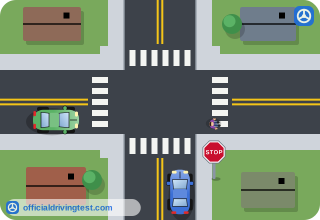
- In the middle of the crosswalk so you can see traffic
- Before entering the crosswalk on the near side of the intersection
- After crossing the crosswalk, at the edge of the intersection
- At the point where your front bumper reaches the curb line
Show answer
Correct answer: Before entering the crosswalk on the near side of the intersection
With no stop line, you stop before entering the crosswalk on the near side of the intersection.
Source: Colorado Driver Handbook (DR 2337, January 2025), page 7 · Open this page in the manual (Manual page 7)
-
At a stop sign with neither a stop line nor a crosswalk, where must you stop?
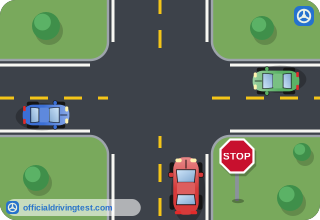
- At the point where your vehicle's front is level with the sign post
- Wherever you can see the stop sign clearly from a distance
- Past the intersecting roadway, in the crosswalk beyond it
- At the point nearest the intersecting road with a view of approaching traffic
Show answer
Correct answer: At the point nearest the intersecting road with a view of approaching traffic
Without a stop line or crosswalk, you stop at the point nearest the intersecting roadway where you have a view of approaching traffic.
Source: Colorado Driver Handbook (DR 2337, January 2025), page 7 · Open this page in the manual (Manual page 7)
-
What must you do at a red, eight-sided sign with white letters reading STOP?
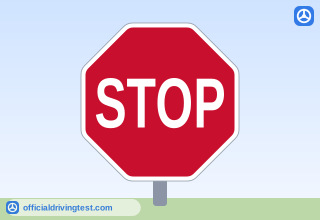
- Come to a complete stop
- Slow down and stop only if traffic is coming
- Slow down and yield to pedestrians only
- Stop only if pedestrians are in the crosswalk
Show answer
Correct answer: Come to a complete stop
Stop signs mean you must come to a complete stop.
Source: Colorado Driver Handbook (DR 2337, January 2025), page 7 · Open this page in the manual (Manual page 7)
-
What do yield signs indicate?
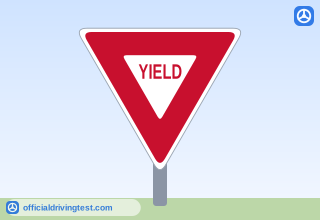
- You must come to a complete stop every time, even if no one is near
- You may proceed without slowing if you arrived at the intersection first
- Slow or stop to yield to all pedestrians and any vehicle with right of way
- You must yield only to vehicles approaching from the right
Show answer
Correct answer: Slow or stop to yield to all pedestrians and any vehicle with right of way
Yield signs indicate you must slow or stop to yield to all pedestrians and any vehicle with right of way.
Source: Colorado Driver Handbook (DR 2337, January 2025), page 7 · Open this page in the manual (Manual page 7)
-
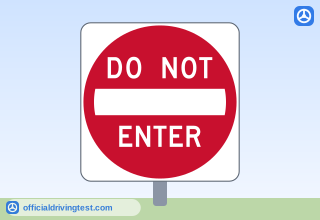
What are Do Not Enter and Wrong Way signs for?
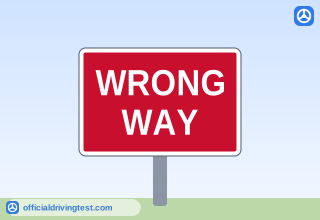
- Marking streets closed to all traffic during construction work
- Warning and redirecting drivers heading the wrong way on streets or ramps
- Telling drivers a road is one way in the direction they are going
- Showing where a freeway ramp ends and local streets begin
Show answer
Correct answer: Warning and redirecting drivers heading the wrong way on streets or ramps
These signs warn and redirect drivers who are heading the wrong way on streets or freeway ramps.
Source: Colorado Driver Handbook (DR 2337, January 2025), page 8 · Open this page in the manual (Manual page 8)
-
What must you do at a Do Not Enter or Wrong Way sign?
- Proceed if no other vehicles are visible
- Slow down and proceed with caution
- Stop, then proceed after yielding to traffic
- Do not proceed past the sign
Show answer
Correct answer: Do not proceed past the sign
The manual says not to proceed past a Do Not Enter or Wrong Way sign.
Source: Colorado Driver Handbook (DR 2337, January 2025), page 8 · Open this page in the manual (Manual page 8)
-
What do One Way signs indicate?
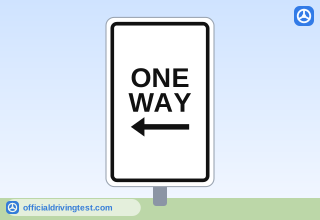
- You may only travel in the direction indicated by the sign's arrow
- Only one vehicle at a time may use the street
- You may pass only on the side the arrow points to
- Parking is allowed only on the side the arrow points to
Show answer
Correct answer: You may only travel in the direction indicated by the sign's arrow
One Way signs indicate you may only travel in the direction the arrow shows.
Source: Colorado Driver Handbook (DR 2337, January 2025), page 8 · Open this page in the manual (Manual page 8)
-
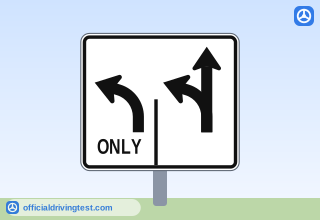
What information do lane control signs give?
- The distance to the next exit on the freeway
- The speed at which each lane must travel
- Direction and information about where you can turn
- Which lanes may be used by passenger vehicles only
Show answer
Correct answer: Direction and information about where you can turn
Lane control signs give direction and information about where you can turn and often use an arrow symbol.
Source: Colorado Driver Handbook (DR 2337, January 2025), page 8 · Open this page in the manual (Manual page 8)
-
Where can lane control signs be placed?
- Only on poles beside the road at intersections
- Along the side of the road or hanging over the road
- Only on signals mounted above intersections
- Only on the back of stop signs
Show answer
Correct answer: Along the side of the road or hanging over the road
Lane control signs are along the side of the road or hang over the road.
Source: Colorado Driver Handbook (DR 2337, January 2025), page 8 · Open this page in the manual (Manual page 8)
-
Besides signs along or over the road, where may lane control arrows sometimes appear?
- Projected on a nearby building wall
- Printed on the roadside curb only
- Displayed on the vehicle's dashboard
- Painted on the road surface
Show answer
Correct answer: Painted on the road surface
The manual says arrows may sometimes be painted on the road.
Source: Colorado Driver Handbook (DR 2337, January 2025), page 8 · Open this page in the manual (Manual page 8)
-
What do prohibited signs indicate?
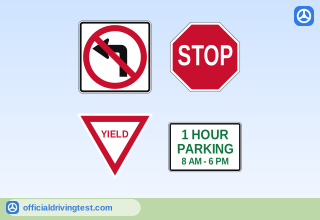
- That you cannot do something, such as make a U-turn or a left turn
- That a movement is allowed only during certain hours of the day
- That you must do something, such as stop or yield
- That you may do something only with a police officer present
Show answer
Correct answer: That you cannot do something, such as make a U-turn or a left turn
Prohibited signs indicate you cannot do something, for example, no U-turn or no left turn.
Source: Colorado Driver Handbook (DR 2337, January 2025), page 8 · Open this page in the manual (Manual page 8)
-
What are work zone signs used with to direct traffic safely through work areas?
- Speed cameras and school crossing guards
- Other traffic control devices or flag persons
- Detour maps posted at nearby intersections
- Only law enforcement vehicles with flashing lights
Show answer
Correct answer: Other traffic control devices or flag persons
Work zone signs are used with other traffic control devices or flag persons.
Source: Colorado Driver Handbook (DR 2337, January 2025), page 8 · Open this page in the manual (Manual page 8)
-
Besides helping direct traffic safely through work areas, work zone signs help protect whom?
- School crossing guards
- Pedestrians on nearby sidewalks
- Railroad crews at crossings
- Roadway workers
Show answer
Correct answer: Roadway workers
Work zone signs help direct traffic safely and protect roadway workers.
Source: Colorado Driver Handbook (DR 2337, January 2025), page 8 · Open this page in the manual (Manual page 8)
-
What does a merging traffic sign warn of?
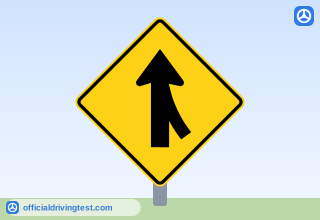
- A railroad crossing close to the intersection
- Pedestrians crossing in the middle of the block
- Vehicles entering from a side street
- Slippery pavement on a curve ahead
Show answer
Correct answer: Vehicles entering from a side street
A merging traffic sign warns of vehicles entering from a side street.
Source: Colorado Driver Handbook (DR 2337, January 2025), page 8 · Open this page in the manual (Manual page 8)
-
Which of these situations do warning signs cover?
- Service facilities, campgrounds and historic sites
- Curves, slippery surfaces and merging traffic
- Destinations, distances and exit numbers
- Laws that apply at a specific location
Show answer
Correct answer: Curves, slippery surfaces and merging traffic
Warning signs cover school zones, curves, slippery surfaces, merging traffic and pedestrian-dense areas.
Source: Colorado Driver Handbook (DR 2337, January 2025), page 8 · Open this page in the manual (Manual page 8)
-
What information do guide signs provide?
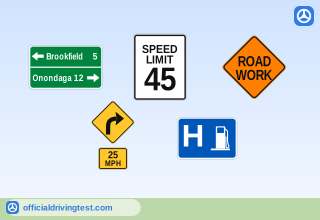
- Directional and mileage information to specific destinations
- Laws and regulations that apply at a location
- Safe speeds around curves and off-ramps
- Directions to service facilities such as gas and food
Show answer
Correct answer: Directional and mileage information to specific destinations
Guide signs provide directional and mileage information to specific destinations.
Source: Colorado Driver Handbook (DR 2337, January 2025), page 8 · Open this page in the manual (Manual page 8)
-
What do advisory speed signs show?
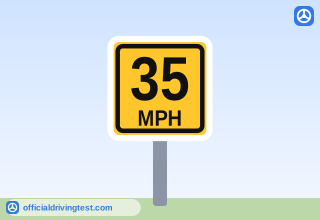
- The legal maximum speed for the road in any weather or lighting
- The lowest speed allowed on the road to avoid being cited
- The safe speed around curves, corners and off-ramps in ideal conditions
- The speed limit in school zones and work zones only
Show answer
Correct answer: The safe speed around curves, corners and off-ramps in ideal conditions
Advisory speed signs show the safe speed around curves, corners and off-ramps in ideal conditions.
Source: Colorado Driver Handbook (DR 2337, January 2025), page 8 · Open this page in the manual (Manual page 8)
-
According to the Colorado Driver Handbook, what does the shape of a route sign or marker indicate?
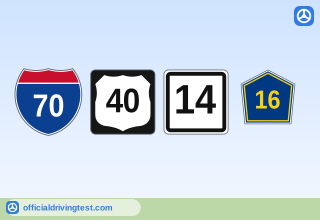
- The type of roadway: Interstate, U.S., State or County highway
- The highest speed limit allowed on that type of roadway
- The number of travel lanes found on that roadway ahead
- The direction of travel, north-south or east-west, on that road
Show answer
Correct answer: The type of roadway: Interstate, U.S., State or County highway
The handbook says the shape of the sign indicates the type of roadway: Interstate, U.S., State or County highway.
Source: Colorado Driver Handbook (DR 2337, January 2025), page 9 · Open this page in the manual (Manual page 9)
-
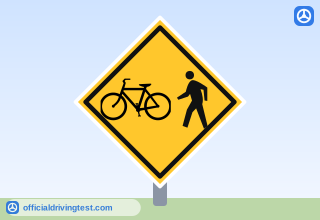
What are the background and symbol colors of a bicycle and pedestrian crossing sign?
- White background with black symbols
- Green background with white symbols
- Yellow background with black symbols
- Orange background with black symbols
Show answer
Correct answer: Yellow background with black symbols
These signs have a yellow background with black symbols.
Source: Colorado Driver Handbook (DR 2337, January 2025), page 9 · Open this page in the manual (Manual page 9)
-
Bicycle and pedestrian crossing signs are used where:
- Only bicyclists are allowed to use the roadway
- Both bicyclists and pedestrians might be crossing the roadway
- Pedestrians are prohibited from crossing the roadway
- A bike lane ends and merges into the traffic lane
Show answer
Correct answer: Both bicyclists and pedestrians might be crossing the roadway
They are used where both bicyclists and pedestrians might be crossing the roadway, such as at an intersection with a shared use path.
Source: Colorado Driver Handbook (DR 2337, January 2025), page 9 · Open this page in the manual (Manual page 9)
-
A reflective orange triangle on the rear of a vehicle means it is designed to travel slower than what speed?
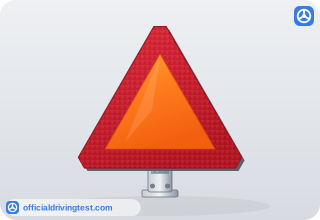
- 15 miles per hour
- 35 miles per hour
- 25 miles per hour
- 45 miles per hour
Show answer
Correct answer: 25 miles per hour
The slow moving vehicle marker means the vehicle is designed to travel at speeds slower than 25 miles per hour.
Source: Colorado Driver Handbook (DR 2337, January 2025), page 9 · Open this page in the manual (Manual page 9)
-
What may be true of the signs on rural roads?
- They are always larger than on city streets
- They are placed at every driveway
- They are always lit at night
- Some may be hidden by trees or bushes
Show answer
Correct answer: Some may be hidden by trees or bushes
Rural roads may not have adequate guide signs, and some signs might be hidden by trees or bushes.
Source: Colorado Driver Handbook (DR 2337, January 2025), page 17 · Open this page in the manual (Manual page 17)