Colorado: Right-of-way and turning — Part 5 Practice Test
Questions in this part include: “To be safe, how many vehicles should you pass at one time?” · “Passing within 100 feet of which of these is prohibited when your view is obstructed?”
Independent educational site · not affiliated with any government agency or DMV
Ready? Test yourself
- Instant feedback with an explanation
- Every answer cites its source in the manual
- Your best score is saved on this device
Questions are original and based on the official manual "Colorado Driver Handbook" (DR 2337, January 2025), Colorado Division of Motor Vehicles (DMV).
All 16 questions in this practice test
Take the test above first, then use this list to study. Tap “Show answer” to see the correct answer and explanation.
Show the questions and answersHide the questions
-
To be safe, how many vehicles should you pass at one time?
- Two vehicles
- Three vehicles
- As many as the lane is clear for
- Only one vehicle
Show answer
Correct answer: Only one vehicle
The handbook says not to count on passing several vehicles at once and to pass only one vehicle at a time.
Source: Colorado Driver Handbook (DR 2337, January 2025), page 15 · Open this page in the manual (Manual page 15)
-
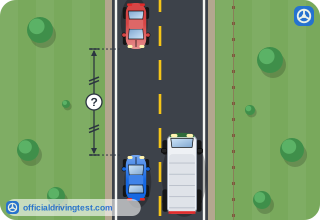
You may not pass if you cannot safely return to the right-hand side before coming within what distance of an oncoming vehicle?
- 200 feet
- 50 feet
- 100 feet
- 500 feet
Show answer
Correct answer: 200 feet
Do not pass if you cannot safely return to the right-hand side before coming within 200 feet of an oncoming vehicle, including a bicyclist in the oncoming lane or shoulder.
Source: Colorado Driver Handbook (DR 2337, January 2025), page 15 · Open this page in the manual (Manual page 15)
-
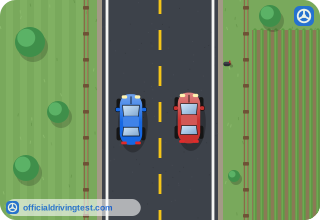
You may not pass if you cannot safely return to the right-hand side before which of these happens?
- You reach the next road sign
- You reach the next exit ramp
- A solid yellow line begins
- A broken yellow line begins
Show answer
Correct answer: A solid yellow line begins
Do not pass if you cannot safely return to the right-hand side before a solid yellow line begins.
Source: Colorado Driver Handbook (DR 2337, January 2025), page 15 · Open this page in the manual (Manual page 15)
-
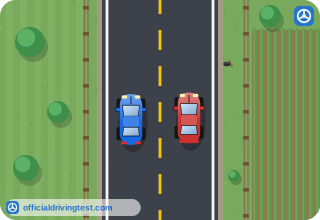
While passing another vehicle, how fast may you drive?
- Up to 5 mph over the posted limit if the pass is done quickly
- No faster than the posted speed limit
- At any speed, as long as you return to your lane promptly
- Up to 10 mph over the limit when the road is a two-lane road
Show answer
Correct answer: No faster than the posted speed limit
Exceeding the posted speed limit when passing is illegal.
Source: Colorado Driver Handbook (DR 2337, January 2025), page 16 · Open this page in the manual (Manual page 16)
-
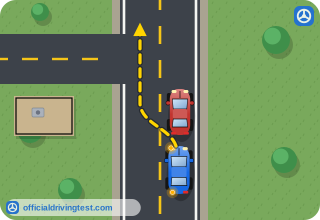
Within what distance of any intersection is it illegal to pass?
- 50 feet
- 150 feet
- 300 feet
- 100 feet
Show answer
Correct answer: 100 feet
The handbook lists passing within 100 feet of any intersection as illegal.
Source: Colorado Driver Handbook (DR 2337, January 2025), page 16 · Open this page in the manual (Manual page 16)
-
Within what distance of any railroad crossing is it illegal to pass?
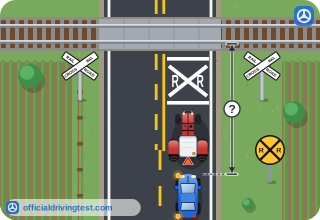
- 100 feet
- 25 feet
- 200 feet
- 500 feet
Show answer
Correct answer: 100 feet
The handbook lists passing within 100 feet of any railroad crossing as illegal.
Source: Colorado Driver Handbook (DR 2337, January 2025), page 16 · Open this page in the manual (Manual page 16)
-
Passing within 100 feet of which of these is prohibited when your view is obstructed?
- A traffic island, median or curb
- A parked vehicle, mailbox or hydrant
- A bridge, viaduct or tunnel
- A crosswalk, bike lane or sidewalk
Show answer
Correct answer: A bridge, viaduct or tunnel
Do not pass within 100 feet of any bridge, viaduct or tunnel when your view is obstructed.
Source: Colorado Driver Handbook (DR 2337, January 2025), page 16 · Open this page in the manual (Manual page 16)
-
Passing on a hill, curve or bridge is illegal under what condition?
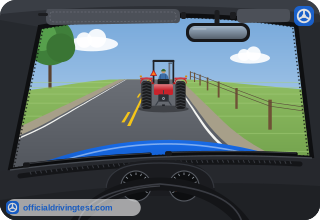
- Only when the posted speed limit is below 35 mph
- When your vision of the road ahead is obstructed
- Only when it is raining or snowing
- Only when another vehicle is following you
Show answer
Correct answer: When your vision of the road ahead is obstructed
Passing on any hill, curve or bridge where vision is obstructed is illegal.
Source: Colorado Driver Handbook (DR 2337, January 2025), page 16 · Open this page in the manual (Manual page 16)
-
Which of these is illegal when passing another vehicle?
- Signaling before you change lanes to pass
- Checking traffic ahead, beside and behind you
- Passing only one vehicle at a time
- Passing in a marked no-passing zone
Show answer
Correct answer: Passing in a marked no-passing zone
Passing in any marked no-passing zone is listed among the illegal behaviors when passing.
Source: Colorado Driver Handbook (DR 2337, January 2025), page 16 · Open this page in the manual (Manual page 16)
-
On a mountain road, which vehicles generally have the right-of-way?
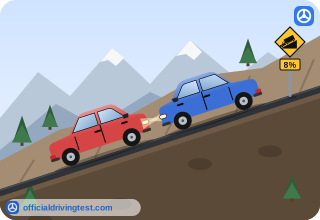
- Vehicles going downhill
- The vehicle that arrived first
- Vehicles going uphill
- The larger vehicle
Show answer
Correct answer: Vehicles going uphill
The handbook says vehicles going uphill have the right-of-way over vehicles going downhill; on a steep, narrow road the downhill vehicle yields unless it is more practicable for the uphill vehicle to return to a wider space or turnout.
Source: Colorado Driver Handbook (DR 2337, January 2025), page 17 · Open this page in the manual (Manual page 17)
-
When there is a lane closure ahead, what does the handbook say drivers should do as they approach the merge point?
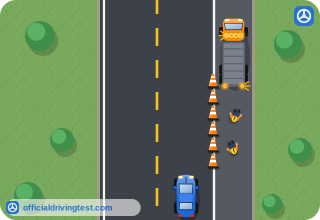
- Continue to drive in both lanes equally
- Move into the open lane as early as possible
- Stop and wait for the other lane to clear
- Use only the lane that will stay open
Show answer
Correct answer: Continue to drive in both lanes equally
The handbook says drivers should keep driving in both lanes equally and take turns filling the open lane just before the lane ends.
Source: Colorado Driver Handbook (DR 2337, January 2025), page 19 · Open this page in the manual (Manual page 19)
-
In a zipper merge, how should you regard drivers who wait to merge until just before the lane ends?
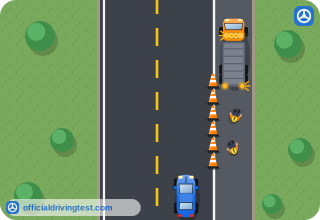
- They are merging too late and creating a hazard
- They are cutting in line and should be kept out
- They are doing it correctly
- They should be warned with the horn
Show answer
Correct answer: They are doing it correctly
The handbook asks drivers to be respectful of those who merge just before the lane ends, because they are doing it correctly.
Source: Colorado Driver Handbook (DR 2337, January 2025), page 19 · Open this page in the manual (Manual page 19)
-
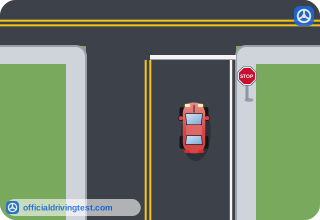
Why should you make right turns from close to the curb, and from a Conflict Zone when one is present?
- It lets you complete the turn faster than the other traffic around you
- It keeps you out of the bike lane after you have finished turning
- It helps pedestrians cross the street in front of your vehicle safely
- It helps prevent crashes with bicyclists coming up behind you on the right
Show answer
Correct answer: It helps prevent crashes with bicyclists coming up behind you on the right
The manual says this helps prevent crashes with bicyclists who approach from behind and may otherwise try to pass on the right.
Source: Colorado Driver Handbook (DR 2337, January 2025), page 23 · Open this page in the manual (Manual page 23)
-
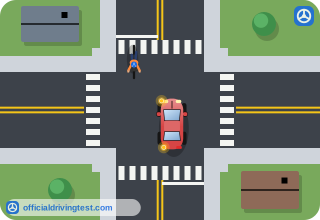
Before making a left turn, what should you actively look for?
- Only oncoming vehicles in the lane next to the one you are in
- Bicyclists in the bike lane on the left side of the road only
- Bicyclists on the right side or shoulder, and their distance and speed
- Only pedestrians who are walking behind your vehicle on the sidewalk
Show answer
Correct answer: Bicyclists on the right side or shoulder, and their distance and speed
The manual says to actively look for people biking on the right side or on the shoulder and accurately judge their distance and speed before turning.
Source: Colorado Driver Handbook (DR 2337, January 2025), page 23 · Open this page in the manual (Manual page 23)
-
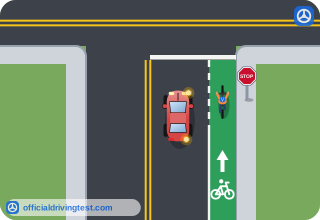
You are driving alongside a bicyclist and preparing to turn right. What should you do?
- Speed up and turn in front of the bicyclist before they arrive
- Slow down, yield and let the bicyclist clear the intersection
- Sound your horn and then turn right ahead of the bicyclist
- Stay beside the bicyclist and turn at the same time as they do
Show answer
Correct answer: Slow down, yield and let the bicyclist clear the intersection
The manual says to slow down, yield and let the bicyclist clear the intersection before making your turn.
Source: Colorado Driver Handbook (DR 2337, January 2025), page 23 · Open this page in the manual (Manual page 23)
-
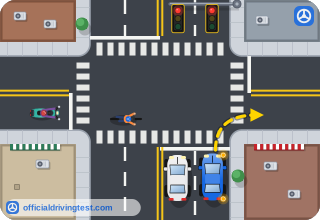
Before turning right at a red light where it is legal, what must you do?
- Slow down and turn if no cars are coming from the left
- Turn without stopping if no pedestrians are present nearby
- Stop only if you can see a bicyclist near your vehicle
- Come to a complete stop and look for bicyclists around you
Show answer
Correct answer: Come to a complete stop and look for bicyclists around you
The manual says to come to a complete stop and look for bicyclists behind or next to your vehicle, turning left from the opposite side, or in the lane you will merge with.
Source: Colorado Driver Handbook (DR 2337, January 2025), page 23 · Open this page in the manual (Manual page 23)