Arkansas: Speed and following distance — Part 5 Practice Test
Questions in this part include: “How does towing affect your stopping distance?” · “When merging with other traffic, about how large a gap do you need?”
Independent educational site · not affiliated with any government agency or DMV
Ready? Test yourself
- Instant feedback with an explanation
- Every answer cites its source in the manual
- Your best score is saved on this device
Questions are original and based on the official manual "Arkansas Driver License Study Guide" (Volume 1, Edition 10, October 2026), Arkansas State Police (ASP).
All 19 questions in this practice test
Take the test above first, then use this list to study. Tap “Show answer” to see the correct answer and explanation.
Show the questions and answersHide the questions
-
How does towing affect your stopping distance?
- The extra weight decreases it
- It stays the same
- The extra weight increases it
- It only changes on wet roads
Show answer
Correct answer: The extra weight increases it
The manual says the extra weight of towing increases your stopping distance.
Source: Arkansas Driver License Study Guide (Volume 1, Edition 10, October 2026), page 59 · Open this page in the manual (Manual page 59)
-
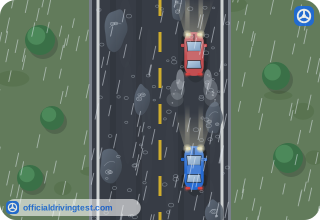
What should you do with your following distance when bad weather makes it hard for you to see?
- Decrease it
- Increase it
- Keep it exactly the same
- Switch to following in the left lane
Show answer
Correct answer: Increase it
The manual says poor visibility from bad weather means you should increase your following distance.
Source: Arkansas Driver License Study Guide (Volume 1, Edition 10, October 2026), page 59 · Open this page in the manual (Manual page 59)
-
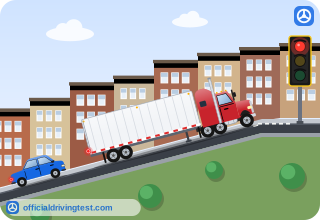
Why should you leave extra space when stopped on a hill?
- Hills cause traffic signals to change much faster than usual
- Vehicles behind you are required to pass you on the right
- Vehicles ahead could roll back when starting off on an incline
- Brake lights do not work properly when stopped on a slope
Show answer
Correct answer: Vehicles ahead could roll back when starting off on an incline
The manual says vehicles in front of you could roll back when taking off from an incline.
Source: Arkansas Driver License Study Guide (Volume 1, Edition 10, October 2026), page 59 · Open this page in the manual (Manual page 59)
-
What two things can you do to help the driver behind you when you must stop or slow down?
- Brake suddenly and flash your headlights
- Keep a steady speed and signal in advance
- Move to the left lane and stay there
- Turn off your signals to avoid confusion
Show answer
Correct answer: Keep a steady speed and signal in advance
The manual says to help the driver behind by keeping a steady speed and signaling in advance when you must stop or slow down.
Source: Arkansas Driver License Study Guide (Volume 1, Edition 10, October 2026), page 60 · Open this page in the manual (Manual page 60)
-
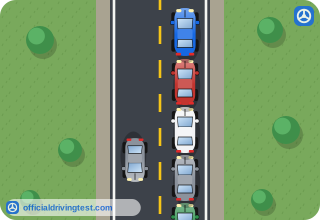
If you drive slower than other vehicles, what should you do?
- Pull to the side of the road and let the vehicles pass
- Stay in your lane and keep your speed so traffic goes around
- Stop in the travel lane until the road ahead is clear
- Move into the left lane and stay there until traffic clears
Show answer
Correct answer: Pull to the side of the road and let the vehicles pass
The manual says to pull to the side of the road, using a turnout area where available, and let the vehicles pass.
Source: Arkansas Driver License Study Guide (Volume 1, Edition 10, October 2026), page 60 · Open this page in the manual (Manual page 60)
-
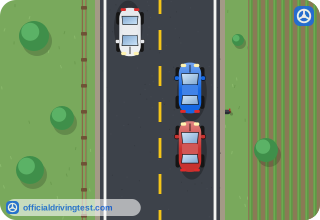
If you are being tailgated and there is no right lane, what does the manual say to do?
- Speed up as much as needed to leave the tailgater behind
- Wait for a clear path ahead and reduce speed so it can pass
- Stop quickly so the tailgater is forced to pass you
- Swerve onto the shoulder and stop at once to let it pass
Show answer
Correct answer: Wait for a clear path ahead and reduce speed so it can pass
The manual says if there is no right lane, wait until the path ahead is clear and reduce speed to allow the tailgater to drive around you.
Source: Arkansas Driver License Study Guide (Volume 1, Edition 10, October 2026), page 60 · Open this page in the manual (Manual page 60)
-
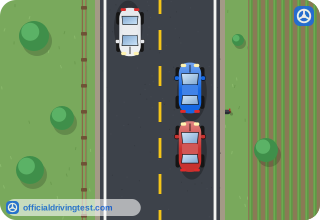
Why should you never slow down too quickly to discourage a tailgater?
- It will damage your brakes and tires over time
- It will confuse other drivers about your lane
- It will cause your engine to stall in traffic
- It raises the risk of being hit from behind
Show answer
Correct answer: It raises the risk of being hit from behind
The manual says slowing down too quickly to discourage a tailgater increases the risk of being hit from behind.
Source: Arkansas Driver License Study Guide (Volume 1, Edition 10, October 2026), page 60 · Open this page in the manual (Manual page 60)
-
What does the manual advise about driving next to other vehicles on multi-lane roads?
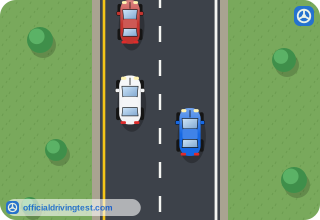
- Avoid it by moving ahead or dropping behind the other vehicle
- Stay beside other vehicles so they cannot change lanes
- Drive next to them so you can keep an eye on their speed
- Stay beside them as long as you use your turn signal
Show answer
Correct answer: Avoid it by moving ahead or dropping behind the other vehicle
The manual says other drivers may crowd your lane, so you should avoid driving next to them and move ahead or drop behind.
Source: Arkansas Driver License Study Guide (Volume 1, Edition 10, October 2026), page 60 · Open this page in the manual (Manual page 60)
-
On a two-lane road, where should you drive in relation to the center line?
- Close to the center line to keep away from the edge
- Straddling the center line when no one is coming
- In the center of your lane, without crowding the center line
- On the edge of the road away from oncoming vehicles
Show answer
Correct answer: In the center of your lane, without crowding the center line
The manual says not to crowd the center line on a two-lane road and always to drive in the center of your lane.
Source: Arkansas Driver License Study Guide (Volume 1, Edition 10, October 2026), page 60 · Open this page in the manual (Manual page 60)
-
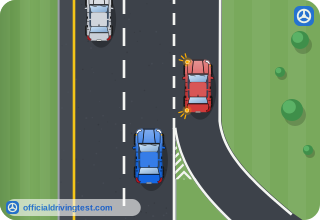
What does the manual say to do for a vehicle entering a roadway that has two or more lanes?
- Speed up to block it
- Make room for it
- Flash your headlights to stop it
- Move onto the shoulder
Show answer
Correct answer: Make room for it
The manual says to make room for a vehicle entering a roadway with two or more lanes.
Source: Arkansas Driver License Study Guide (Volume 1, Edition 10, October 2026), page 60 · Open this page in the manual (Manual page 60)
-
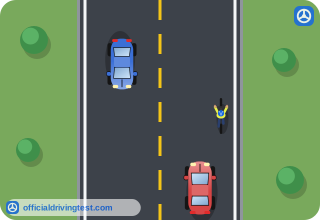
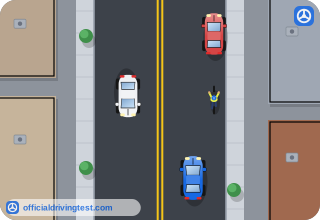
What is the "split difference rule" for steering between two hazards?
- Steer close to the hazard that looks less dangerous
- Stop between the two hazards and wait for them to move
- Steer a middle course between the two hazards
- Drive as close as possible to the hazard on your left
Show answer
Correct answer: Steer a middle course between the two hazards
The manual explains it as splitting the difference between two hazards, for example steering a middle course between oncoming and parked vehicles.
Source: Arkansas Driver License Study Guide (Volume 1, Edition 10, October 2026), page 60 · Open this page in the manual (Manual page 60)
-
If one of two hazards appears more dangerous than the other, how should you use the split difference rule?
- Leave more room on the side of the less dangerous hazard
- Leave more room on the side of the more dangerous hazard
- Leave equal room on both sides regardless
- Stop and let both hazards pass first
Show answer
Correct answer: Leave more room on the side of the more dangerous hazard
The manual says to leave more room on the side of the vehicle that is more dangerous.
Source: Arkansas Driver License Study Guide (Volume 1, Edition 10, October 2026), page 60 · Open this page in the manual (Manual page 60)
-
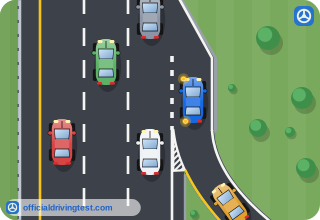
When merging with other traffic, about how large a gap do you need?
- About four seconds
- About one second
- About two seconds
- About ten seconds
Show answer
Correct answer: About four seconds
The manual says that when merging you need a gap of about four seconds.
Source: Arkansas Driver License Study Guide (Volume 1, Edition 10, October 2026), page 61 · Open this page in the manual (Manual page 61)
-
If you move into the middle of a four-second gap while merging, what following distance will you and the vehicle behind you have?
- One second
- Three seconds
- Two seconds
- Four seconds
Show answer
Correct answer: Two seconds
The manual says that in the middle of a four-second gap, you and the vehicle behind you will have a two-second following distance.
Source: Arkansas Driver License Study Guide (Volume 1, Edition 10, October 2026), page 61 · Open this page in the manual (Manual page 61)
-
What should you do about small gaps when merging?
- Merge quickly before the small gap closes completely
- Do not merge in them, since small gaps can get smaller
- Merge only if you flash your headlights at the driver
- Merge if there is at least one car length of space
Show answer
Correct answer: Do not merge in them, since small gaps can get smaller
The manual says not to merge in a small gap, as it can quickly become smaller; enter a gap that gives a large cushion of space.
Source: Arkansas Driver License Study Guide (Volume 1, Edition 10, October 2026), page 61 · Open this page in the manual (Manual page 61)
-
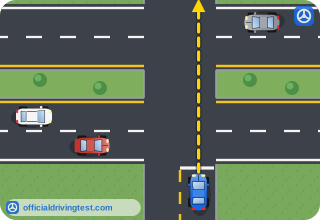
If you are going to cross more than one lane of traffic, how should you do it?
- Cross all the lanes in one move
- Stop and wait in the first lane
- Cross at a diagonal using the shoulder
- Take one lane at a time
Show answer
Correct answer: Take one lane at a time
The manual says to take one lane at a time when crossing more than one lane of traffic.
Source: Arkansas Driver License Study Guide (Volume 1, Edition 10, October 2026), page 61 · Open this page in the manual (Manual page 61)
-
As a rule, how many vehicles should you pass at one time?
- Two
- Three
- As many as are in the lane
- One
Show answer
Correct answer: One
The manual says not to count on having time to pass several cars at once; as a rule, only pass one vehicle at a time.
Source: Arkansas Driver License Study Guide (Volume 1, Edition 10, October 2026), page 61 · Open this page in the manual (Manual page 61)
-
At 55 mph, about how many seconds do you need to pass another vehicle?
- About ten seconds
- About three seconds
- About five seconds
- About twenty seconds
Show answer
Correct answer: About ten seconds
The manual says that at 55 mph you need about ten seconds to pass, so you need a ten second gap in oncoming traffic.
Source: Arkansas Driver License Study Guide (Volume 1, Edition 10, October 2026), page 62 · Open this page in the manual (Manual page 62)
-
At 55 mph, about how far do you and an oncoming vehicle travel in ten seconds?
- About 200 feet
- About 400 feet
- Over 800 feet
- Over 3000 feet
Show answer
Correct answer: Over 800 feet
The manual says at 55 mph you and the oncoming vehicle(s) travel over 800 feet in ten seconds.
Source: Arkansas Driver License Study Guide (Volume 1, Edition 10, October 2026), page 62 · Open this page in the manual (Manual page 62)