Arkansas: Speed and following distance — Part 3 Practice Test
Questions in this part include: “What is the safest speed to drive in traffic?” · “When do crashes involving two or more vehicles often happen?”
Independent educational site · not affiliated with any government agency or DMV
Ready? Test yourself
- Instant feedback with an explanation
- Every answer cites its source in the manual
- Your best score is saved on this device
Questions are original and based on the official manual "Arkansas Driver License Study Guide" (Volume 1, Edition 10, October 2026), Arkansas State Police (ASP).
All 19 questions in this practice test
Take the test above first, then use this list to study. Tap “Show answer” to see the correct answer and explanation.
Show the questions and answersHide the questions
-
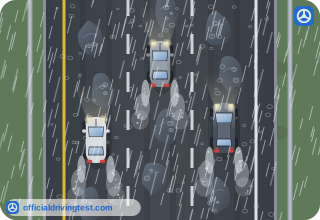
What should you do first if your vehicle begins to hydroplane?
- Brake hard to slow the vehicle quickly
- Turn the steering wheel sharply to the side
- Press the gas pedal harder to regain grip
- Slowly take your foot off the gas pedal
Show answer
Correct answer: Slowly take your foot off the gas pedal
The manual says to slowly take your foot off the gas pedal if you begin to hydroplane.
Source: Arkansas Driver License Study Guide (Volume 1, Edition 10, October 2026), page 55 · Open this page in the manual (Manual page 55)
-
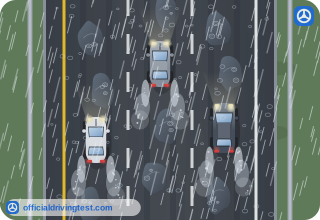
How should you handle the steering wheel if your vehicle begins to hydroplane?
- Keep it straight, and if you must turn, do so slowly
- Turn it sharply in the direction of the skid
- Turn it back and forth to regain traction
- Let go of it until the tires grip again
Show answer
Correct answer: Keep it straight, and if you must turn, do so slowly
The manual says to keep the steering wheel straight and to turn it only in an emergency, and then slowly, or you will lose control or skid.
Source: Arkansas Driver License Study Guide (Volume 1, Edition 10, October 2026), page 55 · Open this page in the manual (Manual page 55)
-
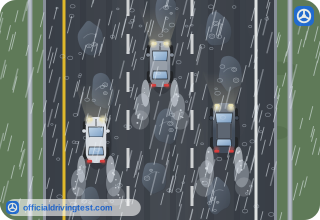
If your vehicle is hydroplaning, when should you try to stop or turn?
- As soon as you feel the tires lose traction
- Right after you take your foot off the gas
- Not until your tires are gripping the road again
- Only after you have braked hard
Show answer
Correct answer: Not until your tires are gripping the road again
The manual says not to try to stop or turn until your tires are gripping the road again.
Source: Arkansas Driver License Study Guide (Volume 1, Edition 10, October 2026), page 55 · Open this page in the manual (Manual page 55)
-
What is the safest speed to drive in traffic?
- Five mph below the speed of other vehicles
- The same speed as other vehicles
- Five mph above the speed of other vehicles
- The highest speed shown on the posted limit signs
Show answer
Correct answer: The same speed as other vehicles
The manual says the safest speed to drive in traffic is the same speed as other vehicles.
Source: Arkansas Driver License Study Guide (Volume 1, Edition 10, October 2026), page 56 · Open this page in the manual (Manual page 56)
-
When do crashes involving two or more vehicles often happen?
- When all vehicles travel in the same direction at the same speed
- When drivers keep a steady speed on a two-lane road
- When drivers use their turn signals for every lane change
- When drivers go faster or slower than other vehicles using the same roadway
Show answer
Correct answer: When drivers go faster or slower than other vehicles using the same roadway
The manual says such crashes often happen when drivers go faster or slower than other vehicles on the same roadway.
Source: Arkansas Driver License Study Guide (Volume 1, Edition 10, October 2026), page 56 · Open this page in the manual (Manual page 56)
-
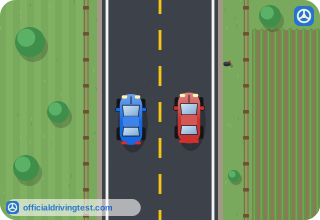
Why is it risky to go faster than other traffic?
- You must keep passing, and each pass risks a collision
- Other drivers will slow down to match your speed
- Your vehicle will use less fuel with every pass you make
- Vehicles ahead cannot change lanes while you pass them
Show answer
Correct answer: You must keep passing, and each pass risks a collision
If you go faster than other traffic you must keep passing vehicles, and each time you pass there is a chance of a collision.
Source: Arkansas Driver License Study Guide (Volume 1, Edition 10, October 2026), page 56 · Open this page in the manual (Manual page 56)
-
How much time does speeding save, according to the manual?
- About 15 minutes an hour
- About half an hour on a long trip
- No more than a few minutes an hour
- More than an hour on a long trip
Show answer
Correct answer: No more than a few minutes an hour
The manual says speeding does not save more than a few minutes an hour.
Source: Arkansas Driver License Study Guide (Volume 1, Edition 10, October 2026), page 56 · Open this page in the manual (Manual page 56)
-
Vehicles are accumulating behind you because you are driving much slower than other traffic. What should you do?
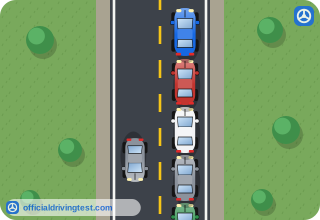
- Speed up to the posted limit at once
- Pull over and allow them to pass
- Turn on your hazard lights and keep your speed
- Move to the center of the road
Show answer
Correct answer: Pull over and allow them to pass
The manual says to pull over and allow vehicles to pass if they are accumulating behind you.
Source: Arkansas Driver License Study Guide (Volume 1, Edition 10, October 2026), page 56 · Open this page in the manual (Manual page 56)
-
You are about to leave a high-speed, two-lane roadway and traffic is following you. Instead of slowing down too soon, what should you do?
- Stop in your lane to let the traffic pass
- Move onto the shoulder and stop
- Tap your brakes and safely reduce your speed
- Hold your speed until you are past your exit
Show answer
Correct answer: Tap your brakes and safely reduce your speed
The manual says to try not to slow down too soon with traffic following and to tap your brakes and safely reduce speed.
Source: Arkansas Driver License Study Guide (Volume 1, Edition 10, October 2026), page 56 · Open this page in the manual (Manual page 56)
-
As you approach slow-moving traffic, what should you give yourself time to do?
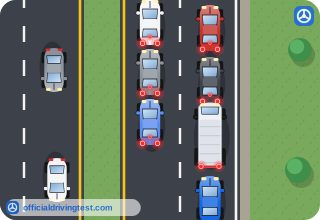
- Speed up and pass at once
- Change lanes or slow down
- Stop in the lane
- Sound your horn until traffic clears
Show answer
Correct answer: Change lanes or slow down
The manual says to give yourself time to change lanes or slow down, because slowing suddenly can cause a traffic accident.
Source: Arkansas Driver License Study Guide (Volume 1, Edition 10, October 2026), page 57 · Open this page in the manual (Manual page 57)
-
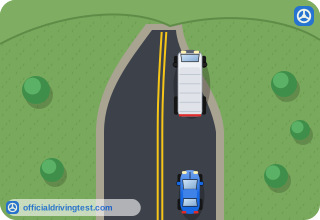
Why should you watch for trucks and underpowered cars on long or steep hills?
- They always travel faster than other vehicles uphill
- They are required to stop at the top of every steep hill
- They cannot use their brakes while going downhill
- They lose speed on hills and take longer to build speed
Show answer
Correct answer: They lose speed on hills and take longer to build speed
The manual says slower vehicles can lose speed on long or steep hills and take longer to build speed when entering traffic.
Source: Arkansas Driver License Study Guide (Volume 1, Edition 10, October 2026), page 57 · Open this page in the manual (Manual page 57)
-
At about what speed do farm tractors, animal-drawn vehicles and roadway maintenance vehicles usually travel?
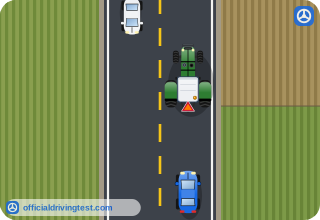
- 25 mph or less
- 35 to 45 mph
- 45 to 55 mph
- 55 mph or more
Show answer
Correct answer: 25 mph or less
The manual says these vehicles usually travel 25 mph or less.
Source: Arkansas Driver License Study Guide (Volume 1, Edition 10, October 2026), page 57 · Open this page in the manual (Manual page 57)
-
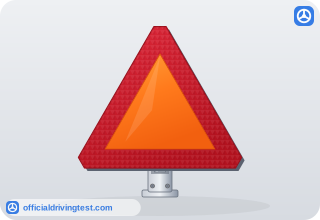
Which vehicles should have a slow-moving vehicle sign visible from the rear?
- Passenger cars and pickup trucks
- Motorcycles and mopeds
- Farm tractors and maintenance vehicles
- School buses and city buses
Show answer
Correct answer: Farm tractors and maintenance vehicles
The manual says these slow vehicles should have a slow-moving vehicle sign visible from the rear.
Source: Arkansas Driver License Study Guide (Volume 1, Edition 10, October 2026), page 57 · Open this page in the manual (Manual page 57)
-
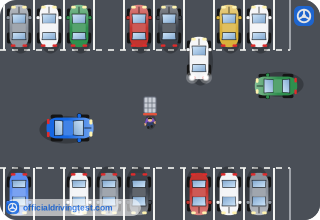
Where people and their vehicles are parked, you have limited space to maneuver. What should you do?
- Keep your speed and sound your horn often
- Reduce your speed to react in crowded spaces
- Move to the center of the roadway to pass
- Use your high beams to see farther
Show answer
Correct answer: Reduce your speed to react in crowded spaces
The manual says to reduce your speed to react in crowded spaces.
Source: Arkansas Driver License Study Guide (Volume 1, Edition 10, October 2026), page 57 · Open this page in the manual (Manual page 57)
-
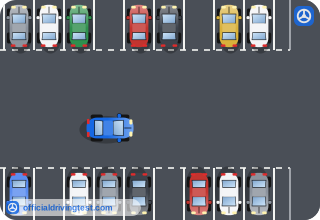
Why should you slow down in shopping centers, parking lots and downtown areas?
- Parking lots have a lower legal speed limit than other roads
- Drivers there are required to use their hazard lights
- Pedestrians there always have to yield to vehicles
- Vehicles stop, start and move in different directions
Show answer
Correct answer: Vehicles stop, start and move in different directions
The manual says these are busy areas with vehicles stopping and starting and moving in different directions.
Source: Arkansas Driver License Study Guide (Volume 1, Edition 10, October 2026), page 57 · Open this page in the manual (Manual page 57)
-
Why should you slow down at narrow bridges and tunnels?
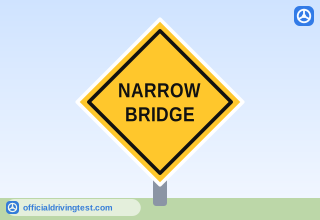
- Vehicles meet close together
- Passing is required there
- The road surface is always icy there
- Headlights are not allowed there
Show answer
Correct answer: Vehicles meet close together
The manual says vehicles meet close together on narrow bridges and in tunnels.
Source: Arkansas Driver License Study Guide (Volume 1, Edition 10, October 2026), page 57 · Open this page in the manual (Manual page 57)
-
When should you slow down at toll booths?
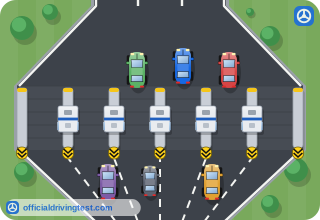
- Only when the toll booth is closed to traffic
- Only when the road is wet or icy at the booth
- When changing lanes, stopping and speeding up
- Only when traffic is light near the toll plaza
Show answer
Correct answer: When changing lanes, stopping and speeding up
The manual says to slow down at toll booths when changing lanes, stopping and speeding up to exit.
Source: Arkansas Driver License Study Guide (Volume 1, Edition 10, October 2026), page 57 · Open this page in the manual (Manual page 57)
-
Why should you slow down near schools, playgrounds and residential streets?
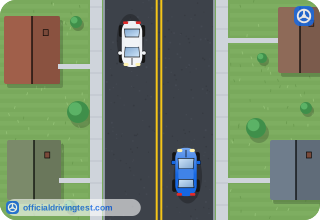
- Drivers there must stop at every driveway they pass
- Children are present and may be crossing the street
- The speed limit there is always 15 miles per hour
- Parked cars there are not allowed near the curb
Show answer
Correct answer: Children are present and may be crossing the street
The manual says these areas have children present and you should be alert for children crossing the street.
Source: Arkansas Driver License Study Guide (Volume 1, Edition 10, October 2026), page 57 · Open this page in the manual (Manual page 57)
-
At night, how far ahead do your headlights let you see, according to the manual?
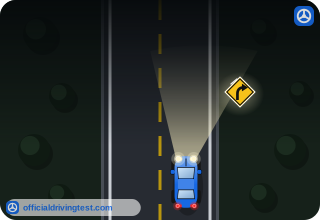
- About 400 feet
- About 200 feet
- About 300 feet
- About 600 feet
Show answer
Correct answer: About 400 feet
The manual says your headlights let you see about 400 feet ahead.
Source: Arkansas Driver License Study Guide (Volume 1, Edition 10, October 2026), page 58 · Open this page in the manual (Manual page 58)