Alaska: Signals and vehicle controls — Part 4 Practice Test
Questions in this part include: “What is the purpose of anti-spray devices such as mud flaps or fenders?” · “How does the manual say to warm up a modern engine?”
Independent educational site · not affiliated with any government agency or DMV
Ready? Test yourself
- Instant feedback with an explanation
- Every answer cites its source in the manual
- Your best score is saved on this device
Questions are original and based on the official manual "Alaska Driver Manual" (Revised October 2025), Alaska Department of Administration, Division of Motor Vehicles (DMV).
All 19 questions in this practice test
Take the test above first, then use this list to study. Tap “Show answer” to see the correct answer and explanation.
Show the questions and answersHide the questions
-
How must mirrors be adjusted?
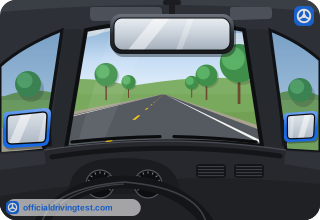
- To give a view to the rear of the vehicle
- To show only the sides of the vehicle
- To face the road directly ahead of you
- To cut down glare from the sun only
Show answer
Correct answer: To give a view to the rear of the vehicle
The manual says mirrors must be adjusted to afford the driver a view to the rear of the vehicle.
Source: Alaska Driver Manual (Revised October 2025), page 68 · Open this page in the manual (Manual page 68)
-
What is the purpose of anti-spray devices such as mud flaps or fenders?
- To keep snow off the headlights
- To reduce wheel spray to the rear
- To stop the doors from freezing
- To protect the muffler from rust
Show answer
Correct answer: To reduce wheel spray to the rear
The manual says the vehicle design or accessories must effectively reduce wheel spray to the rear.
Source: Alaska Driver Manual (Revised October 2025), page 68 · Open this page in the manual (Manual page 68)
-
How should lights that are illuminated while the vehicle is on the roadway be labeled?
- They should be labeled “for off-road use only”
- They should be labeled with the maker’s name
- They should be labeled with their wattage
- They should not be labeled “for off-road use only”
Show answer
Correct answer: They should not be labeled “for off-road use only”
The manual notes that no lights illuminated on the roadway should be labeled “for off-road use only”.
Source: Alaska Driver Manual (Revised October 2025), page 68 · Open this page in the manual (Manual page 68)
-
When may audible signal devices such as the horn be used?
- Only when necessary for safe operation
- Whenever you want to greet a friend
- Whenever you want to hurry slow drivers
- Any time during the daytime hours
Show answer
Correct answer: Only when necessary for safe operation
The manual says audible signal devices may not be used unless necessary to assure safe operation.
Source: Alaska Driver Manual (Revised October 2025), page 69 · Open this page in the manual (Manual page 69)
-
What must every motor vehicle be equipped with to prevent excessive or unusual noise?
- A noise filter placed on the horn button
- A muffler that the driver can switch off
- A muffler in good working order, always in use
- Sound-proof windows on all four sides
Show answer
Correct answer: A muffler in good working order, always in use
The manual requires a muffler in good working order and in constant operation.
Source: Alaska Driver Manual (Revised October 2025), page 69 · Open this page in the manual (Manual page 69)
-
What may no person use upon a motor vehicle on a highway?
- A muffler cutout, bypass, or similar device
- A muffler of any kind at all, ever
- A horn of any kind at all, ever
- A spare tire mounted on the rear door
Show answer
Correct answer: A muffler cutout, bypass, or similar device
The manual says no person may use a muffler cutout, bypass, or similar device on a highway.
Source: Alaska Driver Manual (Revised October 2025), page 69 · Open this page in the manual (Manual page 69)
-
In the summer, when does the manual say to avoid driving because cooler, denser air can boost power and mileage?
- During the early morning
- After dark
- During the coolest part of the evening
- During the hottest parts of the day
Show answer
Correct answer: During the hottest parts of the day
The manual says to avoid driving during the hottest parts of the day in the summer, since cooler, denser air can boost power and mileage.
Source: Alaska Driver Manual (Revised October 2025), page 73 · Open this page in the manual (Manual page 73)
-
The manual advises using your car's air conditioner instead of open windows when driving faster than what speed?
- 40 mph
- 20 mph
- 30 mph
- 55 mph
Show answer
Correct answer: 40 mph
It says to use the air conditioner when driving more than 40 mph, because it creates less drag on the engine than open windows.
Source: Alaska Driver Manual (Revised October 2025), page 73 · Open this page in the manual (Manual page 73)
-
How does the manual say to warm up a modern engine?
- By idling it in neutral for several minutes
- By driving the vehicle
- By revving the engine while parked
- By running the heater at full power while parked
Show answer
Correct answer: By driving the vehicle
The manual says today's engines run most efficiently when warmed up, so you should warm up the vehicle by driving it.
Source: Alaska Driver Manual (Revised October 2025), page 73 · Open this page in the manual (Manual page 73)
-
What does the manual say to do if your vehicle's onboard diagnostics (OBD) light comes on?
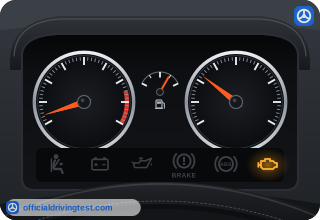
- Talk with your auto dealer for more information
- Keep driving until the light turns off by itself
- Disconnect the battery to reset it
- Ignore it unless the engine stalls
Show answer
Correct answer: Talk with your auto dealer for more information
The manual says that if the OBD light comes on, you should talk with your auto dealer for more information.
Source: Alaska Driver Manual (Revised October 2025), page 73 · Open this page in the manual (Manual page 73)
-
Which habit does the manual say you should NOT do, also called riding your brakes?
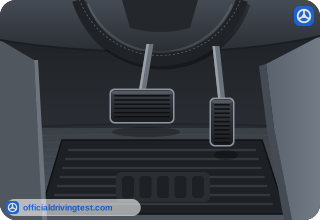
- Letting your foot rest on the brake pedal
- Pressing the brake firmly when you need to stop
- Slowing down before a curve
- Keeping extra distance from the vehicle ahead
Show answer
Correct answer: Letting your foot rest on the brake pedal
The manual says not to let your foot rest on the brake pedal, which is also called riding your brakes.
Source: Alaska Driver Manual (Revised October 2025), page 74 · Open this page in the manual (Manual page 74)
-
What does the manual say about pumping the brakes if your vehicle has antilock brakes?
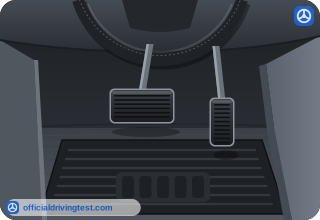
- Pump them rapidly whenever you brake
- Pump them when you need to stop quickly
- Never pump them
- Pump them once before every stop
Show answer
Correct answer: Never pump them
The manual says to never pump the brakes if your vehicle has antilock brakes.
Source: Alaska Driver Manual (Revised October 2025), page 74 · Open this page in the manual (Manual page 74)
-
According to the manual, what does an "ECO" setting on a vehicle do?
- Smooths out gas pedal inputs and optimizes transmission shift points
- Holds the engine at a higher idle speed to warm up faster
- Increases the impact of the air conditioner on the engine
- Switches the transmission to manual shifting only
Show answer
Correct answer: Smooths out gas pedal inputs and optimizes transmission shift points
The manual says an ECO setting smooths out your gas pedal inputs, optimizes transmission shift points, and decreases the impact of air conditioners on the engine.
Source: Alaska Driver Manual (Revised October 2025), page 74 · Open this page in the manual (Manual page 74)
-
What does the manual say about idling?
- It saves fuel in cold weather
- It is required before every drive
- It wastes fuel and may be prohibited
- It is always allowed
Show answer
Correct answer: It wastes fuel and may be prohibited
The manual says idling wastes fuel and may be prohibited.
Source: Alaska Driver Manual (Revised October 2025), page 74 · Open this page in the manual (Manual page 74)
-
If you need to idle, what does the manual say to do?
- Shift to park and press the gas lightly
- Shift to neutral
- Keep the vehicle in drive with your foot on the brake
- Turn on the air conditioner
Show answer
Correct answer: Shift to neutral
The manual says to shift to neutral so the engine is not working against your brake and consuming more fuel.
Source: Alaska Driver Manual (Revised October 2025), page 74 · Open this page in the manual (Manual page 74)
-
As a rule of thumb, the manual says to turn off your car for stops anticipated to be longer than how long?
- 5-10 seconds
- 2-3 minutes
- 10-15 minutes
- 30-60 seconds
Show answer
Correct answer: 30-60 seconds
The manual gives a rule of thumb of turning off your car for stops anticipated to be longer than 30-60 seconds.
Source: Alaska Driver Manual (Revised October 2025), page 74 · Open this page in the manual (Manual page 74)
-
When you need to make multiple stops, where does the manual say to go first to warm up your engine more quickly?
- Your farthest destination
- Your closest destination
- The busiest stop
- The stop with the most parking
Show answer
Correct answer: Your farthest destination
The manual says to go to your farthest destination first to warm up your engine more quickly for better fuel economy.
Source: Alaska Driver Manual (Revised October 2025), page 75 · Open this page in the manual (Manual page 75)
-
According to the manual, what do loose, damaged, or missing fuel tank caps cause?
- Tires to wear faster
- The engine to overheat
- Fuel to evaporate
- The oil to degrade
Show answer
Correct answer: Fuel to evaporate
The manual says loose, damaged, or missing fuel tank caps cause fuel to evaporate, so you should make sure the cap is tight.
Source: Alaska Driver Manual (Revised October 2025), page 75 · Open this page in the manual (Manual page 75)
-
What is the minimum tread depth the manual says tires must have?
- 1/32 inch
- 4/32 inch
- 6/32 inch
- 2/32 inch
Show answer
Correct answer: 2/32 inch
The manual says tires must have at least 2/32 inches of tread depth.
Source: Alaska Driver Manual (Revised October 2025), page 75 · Open this page in the manual (Manual page 75)