Alaska: Signals and vehicle controls — Part 1 Practice Test
Questions in this part include: “What must you do before you stop or suddenly decrease your speed?” · “Who else is required to use hand signals to signal a turn?”
Independent educational site · not affiliated with any government agency or DMV
Ready? Test yourself
- Instant feedback with an explanation
- Every answer cites its source in the manual
- Your best score is saved on this device
Questions are original and based on the official manual "Alaska Driver Manual" (Revised October 2025), Alaska Department of Administration, Division of Motor Vehicles (DMV).
All 20 questions in this practice test
Take the test above first, then use this list to study. Tap “Show answer” to see the correct answer and explanation.
Show the questions and answersHide the questions
-
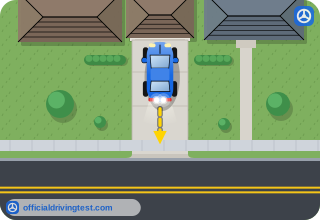
Instead of depending on mirrors when backing, what should you do?
- Watch the side mirrors and ignore the rear window completely
- Lean out of the driver’s window and look back at the road
- Rely only on a rearview camera if your vehicle has one fitted
- Turn your body and head to the right and look out the rear window
Show answer
Correct answer: Turn your body and head to the right and look out the rear window
The backing instructions say not to depend on mirrors, but to turn your body and head to the right and look out the rear window.
Source: Alaska Driver Manual (Revised October 2025), page 26 · Open this page in the manual (Manual page 26)
-
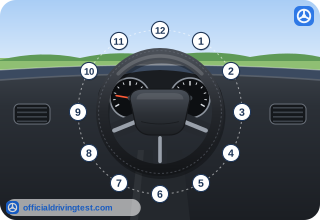
When backing, where should your left hand be?
- At the top of the steering wheel
- At the bottom of the steering wheel
- On the gear shift
- On the window ledge
Show answer
Correct answer: At the top of the steering wheel
The manual says to place your left hand at the top of the steering wheel when backing.
Source: Alaska Driver Manual (Revised October 2025), page 26 · Open this page in the manual (Manual page 26)
-
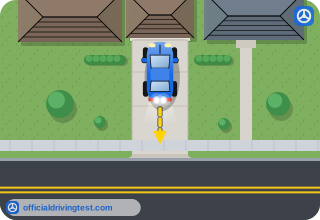
When backing, in which direction should you move the steering wheel?
- In the direction you want the front of your vehicle to go
- Away from the direction you want to go
- In the direction you want the rear of your vehicle to go
- Straight until the vehicle has stopped
Show answer
Correct answer: In the direction you want the rear of your vehicle to go
The manual says to move the wheel in the direction you want the REAR of your vehicle to go.
Source: Alaska Driver Manual (Revised October 2025), page 26 · Open this page in the manual (Manual page 26)
-
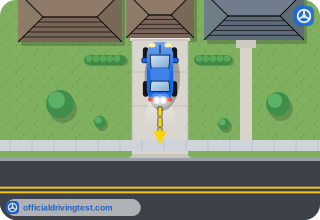
How should you back your vehicle?
- At a steady moderate speed, looking only at the rear window
- Slowly, keeping your eyes moving to all sides of your car
- Quickly, so you spend less time in the roadway
- Slowly, keeping your eyes fixed straight behind you
Show answer
Correct answer: Slowly, keeping your eyes moving to all sides of your car
The manual says to back slowly and keep your eyes moving to all sides of your car.
Source: Alaska Driver Manual (Revised October 2025), page 26 · Open this page in the manual (Manual page 26)
-
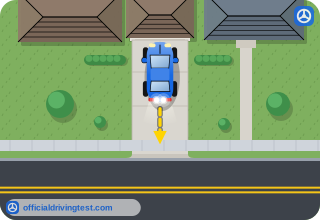
When backing, whom must you always yield to?
- Only vehicles on the street
- Only people on the sidewalk
- Only vehicles that are moving faster than you
- Vehicles or people on the street or sidewalk
Show answer
Correct answer: Vehicles or people on the street or sidewalk
The manual says to always yield to vehicles or people on the street or sidewalk and be prepared to stop when backing.
Source: Alaska Driver Manual (Revised October 2025), page 26 · Open this page in the manual (Manual page 26)
-
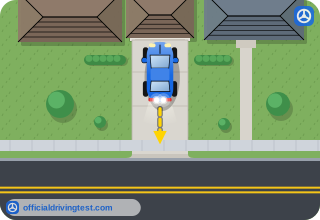
What speed does the manual suggest you not exceed when backing?
- 5 mph
- 10 mph
- 15 mph
- 20 mph
Show answer
Correct answer: 5 mph
The manual suggests your speed not exceed 5 mph when backing.
Source: Alaska Driver Manual (Revised October 2025), page 26 · Open this page in the manual (Manual page 26)
-
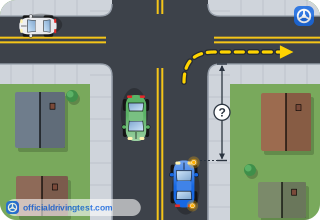
How far before a turn must your hand or directional signal be given continuously?
- During the last 100 feet
- During the last 50 feet
- During the last 200 feet
- During the last 25 feet
Show answer
Correct answer: During the last 100 feet
The signal must be given continuously during the last 100 feet before turning.
Source: Alaska Driver Manual (Revised October 2025), page 30 · Open this page in the manual (Manual page 30)
-
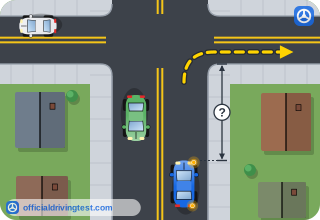
When may a turn signal be given from farther away than 100 feet before the turn?
- Only when you are turning from a one-way street
- Only when another driver asks you to signal early
- When traffic conditions or your higher speeds warrant it
- Never, because the signal must start at exactly 100 feet
Show answer
Correct answer: When traffic conditions or your higher speeds warrant it
The signal may be given from a greater distance when traffic conditions or the higher speeds of your vehicle warrant it.
Source: Alaska Driver Manual (Revised October 2025), page 30 · Open this page in the manual (Manual page 30)
-
What must you do before you stop or suddenly decrease your speed?
- Sound your horn to warn the drivers behind you
- Signal your intentions for the benefit of other drivers
- Turn on your headlights so others can see you
- Move onto the shoulder of the road first
Show answer
Correct answer: Signal your intentions for the benefit of other drivers
You must never stop or suddenly slow down without signaling your intentions to the other drivers.
Source: Alaska Driver Manual (Revised October 2025), page 30 · Open this page in the manual (Manual page 30)
-
What should you make sure of regarding your turn signals?
- They are switched on at all times while the vehicle is moving
- They are replaced by hand signals whenever it is snowing
- They flash faster than the signals of other vehicles
- They are clean and free from dust, dirt, ice, or snow
Show answer
Correct answer: They are clean and free from dust, dirt, ice, or snow
The manual says to be sure turn signals are clean and free from dust, dirt, ice, or snow.
Source: Alaska Driver Manual (Revised October 2025), page 30 · Open this page in the manual (Manual page 30)
-
When does the manual say you should use hand signals?
- Only when your turn signal lights stop working at night
- Whenever you are driving on a road with more than two lanes
- When bright sun or a line of cars behind you could hide your turn signal
- Only when you are turning at an intersection with a traffic light
Show answer
Correct answer: When bright sun or a line of cars behind you could hide your turn signal
Hand signals are used when the sun is shining brightly or a line of cars following you could obscure your turn signal light.
Source: Alaska Driver Manual (Revised October 2025), page 30 · Open this page in the manual (Manual page 30)
-
What does Alaska law require you to do with your directional signal light after you use it?
- Cancel the signal light
- Leave it on until you reach the next intersection
- Leave it flashing for 100 feet after the turn
- Turn it off only if a vehicle is behind you
Show answer
Correct answer: Cancel the signal light
Alaska law requires you to cancel your directional signal light after you use it.
Source: Alaska Driver Manual (Revised October 2025), page 30 · Open this page in the manual (Manual page 30)
-
Why is it a problem to leave a directional signal on after you have finished turning?
- It signals other drivers that you plan to stop suddenly ahead
- Other drivers may think your headlights are not working
- It tells pedestrians that they may cross in front of you
- Other drivers think you are still turning and may pull in front of you
Show answer
Correct answer: Other drivers think you are still turning and may pull in front of you
An unintended signal still means you are turning to other drivers, who might turn or drive across in front of you.
Source: Alaska Driver Manual (Revised October 2025), page 30 · Open this page in the manual (Manual page 30)
-
Who else is required to use hand signals to signal a turn?
- Pedestrians who are crossing the street
- Bicyclists
- Only drivers of vehicles without turn signals
- Passengers riding in the front seat
Show answer
Correct answer: Bicyclists
The manual states that bicyclists are also required to use hand signals to signal a turn.
Source: Alaska Driver Manual (Revised October 2025), page 30 · Open this page in the manual (Manual page 30)
-
In the hand signals shown in the manual, how does a driver signal a left turn?
- The left arm held straight out to the side
- The left arm bent straight up at the elbow
- The left arm pointing downward
- The left arm pulled inside and resting on the door
Show answer
Correct answer: The left arm held straight out to the side
The manual shows a left turn signaled with the driver’s arm extended straight out the window.
Source: Alaska Driver Manual (Revised October 2025), page 30 · Open this page in the manual (Manual page 30)
-
In the hand signals shown in the manual, how does a driver signal a right turn?
- The left arm held straight out to the side
- The left arm pointing downward
- The left arm bent upward at the elbow
- The left arm pulled inside and resting on the door
Show answer
Correct answer: The left arm bent upward at the elbow
The manual shows a right turn signaled with the driver’s arm bent upward out the window.
Source: Alaska Driver Manual (Revised October 2025), page 30 · Open this page in the manual (Manual page 30)
-
In the hand signals shown in the manual, how does a driver signal to stop or slow?
- The left arm held straight out to the side
- The left arm pointing downward
- The left arm bent upward at the elbow
- The left arm pulled inside and resting on the door
Show answer
Correct answer: The left arm pointing downward
The manual shows a stop or slow signal with the driver’s arm pointing downward out the window.
Source: Alaska Driver Manual (Revised October 2025), page 30 · Open this page in the manual (Manual page 30)
-
What can signaling for turns help prevent?
- Head-on collisions
- Collisions with pedestrians
- Rear end collisions
- Skids on icy roads
Show answer
Correct answer: Rear end collisions
The manual says signaling for turns can prevent rear end collisions.
Source: Alaska Driver Manual (Revised October 2025), page 32 · Open this page in the manual (Manual page 32)
-
Before moving into the left lane to pass, what should you signal?
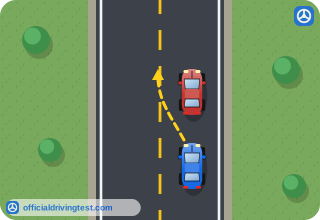
- A right turn
- A left turn
- A stop or slow signal
- Nothing until you are beside the vehicle
Show answer
Correct answer: A left turn
The manual says to check your rear vision mirror and signal a left turn to the left lane.
Source: Alaska Driver Manual (Revised October 2025), page 36 · Open this page in the manual (Manual page 36)
-
When you return to the right lane after passing, what should you do with your signal?
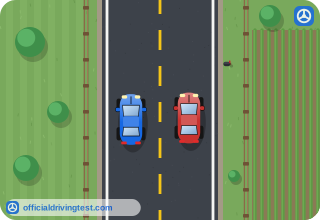
- Signal a right turn and leave it on for 100 feet
- Signal a left turn and leave it on until you are in the lane
- Use no signal, because you already signaled to pass
- Signal a right turn, then cancel the signal light
Show answer
Correct answer: Signal a right turn, then cancel the signal light
You signal a right turn to return to the right lane and be sure to cancel the signal light.
Source: Alaska Driver Manual (Revised October 2025), page 36 · Open this page in the manual (Manual page 36)