Alabama: Emergencies — Part 3 Practice Test
Questions in this part include: “What are often the warning signs of the loss of a wheel?” · “Why should you not brake or shift gears when your steering fails?”
Independent educational site · not affiliated with any government agency or DMV
Ready? Test yourself
- Instant feedback with an explanation
- Every answer cites its source in the manual
- Your best score is saved on this device
Questions are original and based on the official manual "Alabama Driver Manual" (November 2024), Alabama Law Enforcement Agency (ALEA), Driver License Division.
All 17 questions in this practice test
Take the test above first, then use this list to study. Tap “Show answer” to see the correct answer and explanation.
Show the questions and answersHide the questions
-
What may warn you of an impending blowout?
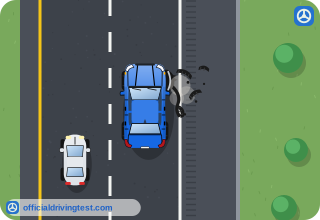
- A thumping sound caused by a bulge in the tire
- A high whine from the engine
- A burning smell from the brakes
- A sudden drop in the steering wheel's weight
Show answer
Correct answer: A thumping sound caused by a bulge in the tire
A thumping sound from a bulge in the tire can warn of a blowout.
Source: Alabama Driver Manual (November 2024), page 73 · Open this page in the manual (Manual page 73)
-
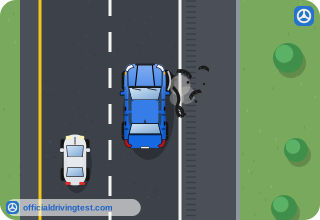
Which is one of the most common reasons for blowouts?
- Worn windshield wiper blades
- Low windshield washer fluid
- Under-inflation
- A weak battery
Show answer
Correct answer: Under-inflation
The manual says under-inflation is one of the most common reasons for blowouts.
Source: Alabama Driver Manual (November 2024), page 74 · Open this page in the manual (Manual page 74)
-
What are often the warning signs of the loss of a wheel?
- A hissing sound and an overheating engine
- A thumping noise and/or a pulling to one side
- Smoke from under the hood
- A brake pedal that sinks slowly
Show answer
Correct answer: A thumping noise and/or a pulling to one side
The warning signs are a thumping noise and/or pulling to one side.
Source: Alabama Driver Manual (November 2024), page 74 · Open this page in the manual (Manual page 74)
-
If you suddenly lose control of your steering, what should you do?
- Brake hard immediately to slow the vehicle
- Shift into a lower gear to slow down quickly
- Press harder on the accelerator to keep control
- Ease up on the accelerator, but do not brake
Show answer
Correct answer: Ease up on the accelerator, but do not brake
The manual says to ease up on the accelerator without braking.
Source: Alabama Driver Manual (November 2024), page 74 · Open this page in the manual (Manual page 74)
-
Why should you not brake or shift gears when your steering fails?
- A sudden change in speed may throw the vehicle off balance
- The brakes do not work at all when steering fails
- Shifting gears locks the steering wheel in place
- The engine will stall at once and the car will stop
Show answer
Correct answer: A sudden change in speed may throw the vehicle off balance
A sudden change in speed could throw the car off balance.
Source: Alabama Driver Manual (November 2024), page 74 · Open this page in the manual (Manual page 74)
-
After steering failure, as the car slows down, what may you be able to do?
- Brake hard to stop as quickly as possible
- Shift into reverse to slow the car down
- Brake very gently to help bring it to a stop
- Shift to a higher gear to slow the engine
Show answer
Correct answer: Brake very gently to help bring it to a stop
Once the car has slowed, very gentle braking may help stop it.
Source: Alabama Driver Manual (November 2024), page 74 · Open this page in the manual (Manual page 74)
-
If your brake pedal suddenly sinks all the way to the floor, what should you try first?
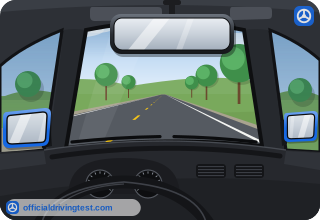
- Turning off the ignition at once
- Pumping the pedal to build up the pressure
- Shifting into reverse
- Pulling the parking brake as hard as you can
Show answer
Correct answer: Pumping the pedal to build up the pressure
The first step is to pump the pedal to build up pressure.
Source: Alabama Driver Manual (November 2024), page 74 · Open this page in the manual (Manual page 74)
-
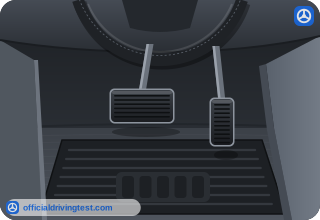
What gives advance warning that your brakes are starting to fail?
- The pedal becomes very hard to push down at once
- A loud squeal each time you stop the vehicle
- The pedal vibrates strongly at all speeds
- The pedal feels spongy and slowly continues to sink
Show answer
Correct answer: The pedal feels spongy and slowly continues to sink
A spongy pedal that slowly continues to sink warns of brake failure.
Source: Alabama Driver Manual (November 2024), page 74 · Open this page in the manual (Manual page 74)
-
If pumping does not build brake pressure, how should you apply the emergency or parking brake?
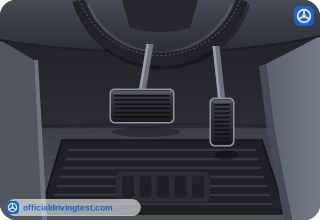
- Gently, so you do not lock the brakes and skid
- Firmly, all the way down at once to stop fast
- Only after you have turned the engine off
- Only when driving faster than 35 mph
Show answer
Correct answer: Gently, so you do not lock the brakes and skid
Apply it gently to avoid locking the brakes and causing a skid.
Source: Alabama Driver Manual (November 2024), page 74 · Open this page in the manual (Manual page 74)
-
How can the engine help you slow down after brake failure?
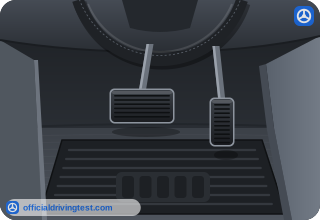
- Shift into neutral
- Shift into reverse
- Shift to a lower gear
- Shift into park while moving
Show answer
Correct answer: Shift to a lower gear
Shifting to a lower gear lets the engine slow the vehicle.
Source: Alabama Driver Manual (November 2024), page 74 · Open this page in the manual (Manual page 74)
-
What happens to power steering and power brakes when you turn off the engine?
- They keep working normally for several minutes
- You lose this assistance
- Only the power brakes are lost
- They become stronger
Show answer
Correct answer: You lose this assistance
Turning off the engine takes away power steering and power brake assistance.
Source: Alabama Driver Manual (November 2024), page 74 · Open this page in the manual (Manual page 74)
-
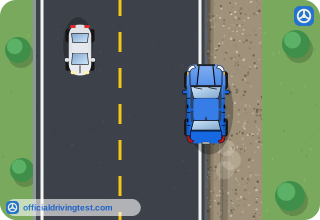
If your wheels drift onto the shoulder of the road, what should you do?
- Swerve sharply back onto the pavement right away to stay in your lane
- Brake hard until stopped, then turn back onto the pavement
- Accelerate back onto the pavement as fast as you can
- Stay on the shoulder and slow down, then turn gently back onto the pavement
Show answer
Correct answer: Stay on the shoulder and slow down, then turn gently back onto the pavement
Swerving back might throw the car off balance, so slow down first and turn back gently.
Source: Alabama Driver Manual (November 2024), page 74 · Open this page in the manual (Manual page 74)
-
If you see a car coming toward you in your lane, what should you do?
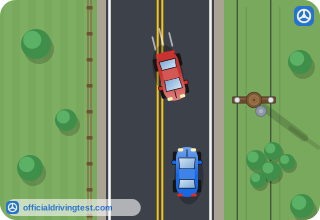
- Pull to the right, slow down and sound your horn
- Pull into the left lane and speed up to get past
- Brake hard and stop in the middle of your lane
- Speed up and try to pass the car on the right
Show answer
Correct answer: Pull to the right, slow down and sound your horn
Pull to the right, slow down and sound the horn.
Source: Alabama Driver Manual (November 2024), page 74 · Open this page in the manual (Manual page 74)
-
At night, if a car is coming toward you in your lane, what should you do in addition to sounding your horn?
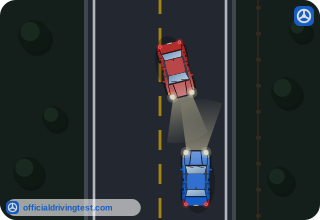
- Turn off your lights
- Turn on only your parking lights
- Flash your lights
- Turn on your four-way flashers
Show answer
Correct answer: Flash your lights
Flashing your lights may wake a drowsy or inattentive driver.
Source: Alabama Driver Manual (November 2024), page 74 · Open this page in the manual (Manual page 74)
-
Why should you not turn into the left lane when a car is coming toward you in your lane?
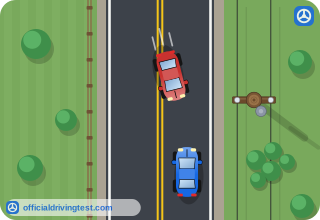
- The left lane is always reserved for faster passing traffic
- The oncoming driver might wake up and swing back into your path
- Changing lanes while sounding the horn is against the law
- Your headlights would not reach that lane at night
Show answer
Correct answer: The oncoming driver might wake up and swing back into your path
The oncoming driver could swing back into your path.
Source: Alabama Driver Manual (November 2024), page 74 · Open this page in the manual (Manual page 74)
-
A car is passing you and can complete the pass with your help. What should you do?
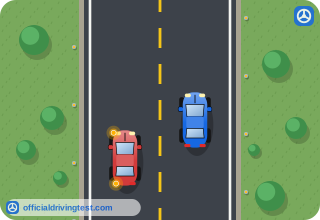
- Speed up and stay beside the passing car until it falls back
- Move into the left lane to give the car room
- Move onto the shoulder and stop right away
- Slow your speed to allow the driver to move ahead of you quickly
Show answer
Correct answer: Slow your speed to allow the driver to move ahead of you quickly
Slowing lets the passing driver get ahead quickly.
Source: Alabama Driver Manual (November 2024), page 74 · Open this page in the manual (Manual page 74)
-
A car is trying to pass you, a crash is almost certain, and the right shoulder is adequate. What should you do?
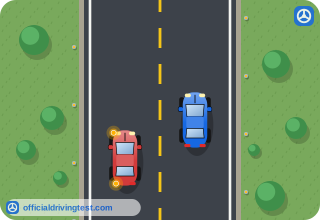
- Move quickly onto the shoulder to let the passing car into your lane
- Brake hard in your lane and keep sounding your horn loudly
- Swerve into the left lane to get out of the way of the car
- Stop in your lane and wait for the other car to finish
Show answer
Correct answer: Move quickly onto the shoulder to let the passing car into your lane
Moving onto an adequate right shoulder lets the passing car move into your lane.
Source: Alabama Driver Manual (November 2024), page 74 · Open this page in the manual (Manual page 74)